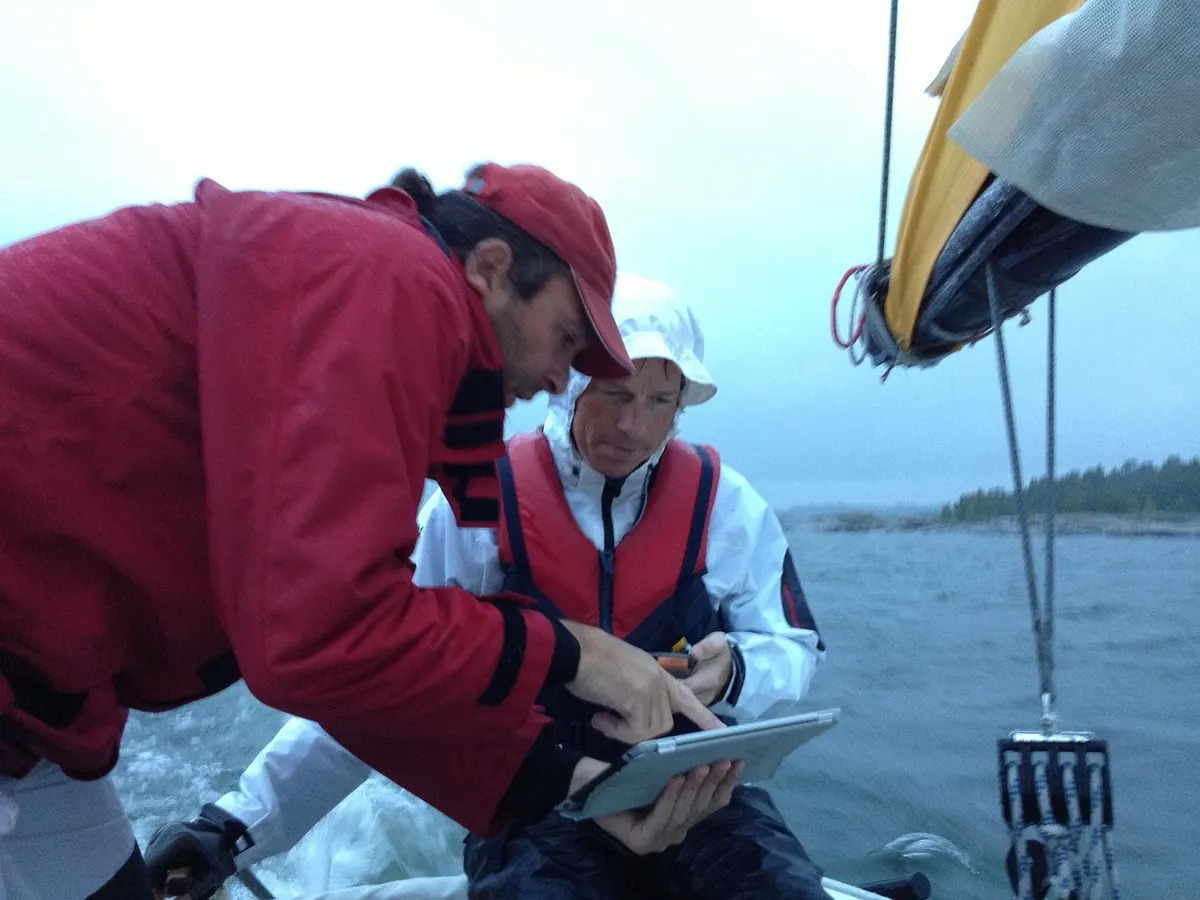
There is a particular kind of British rain that doesn't fall so much as travel. It comes at you sideways across a Snowdonia col, finds the gap between hood and collar, and settles in for the afternoon. In that weather, the choice between a waterproof jacket and a waterproof smock stops being a matter of taste and starts to shape how good your day is.
Both are shells. Both keep the rain out. The difference lies in how they deal with heat, how they pack, and how much faff they involve when you're halfway up a hill with your hood already up.
The core difference in one minute
A jacket has a full-length front zip. You can open it, remove it, put it back on, and rearrange layers underneath without touching your hood or your hat. A smock, sometimes called an anorak, pulls over your head and usually has a chest zip reaching to sternum level, occasionally lower. Some add arm vents or long side zips; a few are built around fabrics that push moisture in one direction rather than relying on a membrane.
That single design decision ripples through everything else: how many seams there are, where water can creep in, how quickly you can dump heat, and how easy it is to change your mind about what you're wearing.
Ventilation: where smocks win and lose
Dumping heat quickly
When you're climbing — a long pull up a Lakeland zigzag, a steep path out of a Welsh valley — the problem isn't the rain, it's the steam. You overheat, you sweat, your baselayer gets damp, and you chill fast the moment you stop.
A jacket handles this better. Opened to the waist, it becomes a windbreak with a chimney. Add pit zips and you can shift a surprising amount of heat while keeping your torso covered and your hood doing its job.
A smock can't do that. Its chest zip vents the front, and arm vents help, but you can't open it down the middle. What it does instead is stay put. Because you can't whip it off in ten seconds, you tend to choose your layers properly at the car park and then leave them alone. Plenty of hill walkers find a smock with a long chest zip and decent underarm venting easier to live with on a wet day than a jacket they keep unzipping and rezipping as showers come and go.
The one-piece advantage
Fewer seams, no long front zip. There's less to leak and less loose fabric to flap when the wind is strong enough to press a jacket's front flat against you and work water through any weakness. In sustained wind and driving rain, that simpler front panel is more forgiving.
Packability and weight
For the same fabric and a comparable set of features, a smock is usually a touch lighter and packs a little smaller, because it uses less zip, less seam tape and less hardware. Don't expect miracles — think of it as trimming grams rather than saving serious weight. If you carry a shell "just in case" all year round, a light smock makes a tidy emergency layer that disappears into the top of your rucksack.
The exception is bulk. Some smocks are warm systems in their own right, with pile linings or heavier face fabrics, and those roll into something noticeably bigger than a thin shell. Compare like with like: a heavy smock against a light jacket tells you nothing useful.
Weather protection in British rain
Both designs will keep you dry if they fit properly and are looked after. The meaningful differences are in the details.
- Front closure: a full-length zip needs an effective storm flap and a decent zip garage. A smock's shorter zip is simply easier to protect.
- Hood: this matters far more than the jacket-versus-smock question. Look for a wired or stiffened peak, two or three points of adjustment, and enough depth to wear over a hat without dragging the fabric off your forehead.
- Cuffs: adjustable, and long enough to sit over your glove cuffs. Rain running down a sleeve is a common way to get wet from the inside.
- Hem: a drawcord you can tighten one-handed, and a cut that stays below your rucksack hip belt rather than riding up above it.
- Face fabric and finish: a durable water repellent finish stops the outer fabric soaking up water and feeling clammy. It wears off with use and washing, so re-proof it when the surface starts wetting out instead of beading.
Choosing between them
Pick a jacket if you run hot, stop often, walk in mixed weather with plenty of on-and-off, or like to fine-tune layers through the day. It's also the friendlier option if you share kit, if you walk with children and need to move quickly, or if you want a shell you can throw on over a wet rucksack-strap arrangement without a wrestling match.
Pick a smock if you're a set-off-and-keep-going walker who prefers a simple system, hates flapping fabric, walks in sustained wind and rain, and would rather choose one combination of layers and trust it. The trade-off is real: putting a smock on when you're already cold and wet, with a hood, hat and glasses to negotiate, is genuinely awkward. Most smock wearers simply put it on at the start and leave it there.
Things that matter either way
Fit beats design. A shell that's too tight compresses your midlayer and reduces the air gap that keeps you warm; one that's too baggy billows in the wind and lets rain up under the hem. Try it on over the layers you actually wear in winter.
Manage your layers underneath: a wicking baselayer and a thin fleece or synthetic midlayer you can add or remove at a sheltered stop. No membrane breathes as fast as you sweat, so ventilation is about management, not perfection.
Keep it clean and proofed, and store it dry. Dirt and body oils degrade performance, and a shell that wets out feels cold even when it isn't leaking.
Finally, remember the safety side. Cold and wet is a serious combination on a British hill. Carry a dry spare layer in a dry bag, eat and drink regularly, and get out of the wind for stops. If someone becomes clumsy, slurrs their words, or stops shivering, treat it as an emergency: shelter them, get them into dry layers, and seek help. If you're unsure about symptoms or treatment, speak to a medical professional.
Photo: Pexels / Pixabay