The hill does not care that it was sunny when you left the car park. Most difficult days out in the British hills are not caused by drama — a fall, a broken ankle, an unplanned night out — but by a string of small, ordinary decisions that seemed sensible at 9am and looked daft by 3pm.
None of the mistakes below need expensive kit or years of experience to fix. They mostly need knowing about them in advance, which is what this is for.
Wearing cotton, and dressing for the car park
Almost every beginner turns up in jeans or a cotton T-shirt at some point, usually because the car park felt mild and the sun was out. Cotton is fine until it gets wet — from rain or from your own sweat — and then it stops being insulation and becomes a cold, heavy compress against your skin. It dries slowly too, which matters when the wind is doing its work on an exposed ridge.
You do not need to spend a fortune. A synthetic or merino base layer, a fleece, and a waterproof jacket and trousers will cover most days in the UK hills from spring to autumn; add a warmer mid-layer in winter. Choose quick-drying trousers over denim, and pack a spare dry top in a dry bag. The test is simple: if the weather turns, you should be able to change your upper half and stay warm.
Treating a phone as a navigation plan
Phone signal vanishes in valleys, behind ridges and across large parts of the Highlands, the Lakes and mid-Wales. Batteries also drain far faster than usual in the cold, and faster still when the screen, GPS and camera are all running. A phone that was at 70% in the car park can be flat by the time you actually need it.
So carry a paper map covering the ground you are walking on, plus a compass, and know how to use both together. Download offline maps and a route file as a backup, not as the plan. Take a small power bank. Before you leave, tell someone your route, your expected finish time and what to do if you have not messaged by then.
If something goes badly wrong, dial 999 or 112 and ask for the police, then mountain rescue. If you often walk where there is no signal, look into registering for the emergency SMS service before you need it — you can only set it up in advance.
Assuming the weather will hold
British hill weather changes within an hour, and the higher you go, the worse it gets: air cools by roughly a degree for every 150 metres of height gained, before wind chill is added on top. A still, warm valley can mean a cold, gusty summit. Cloud can drop and take your visibility with it, turning a clear path into a featureless slope in minutes.
Check a mountain-specific forecast — MWIS and the Met Office both publish them — the night before and again in the morning. Look at wind speed as carefully as rain; wind is the thing most likely to make you turn around. Then set a turnaround time and stick to it.
If you are still debating whether to turn back, you probably already should have.
Packing too little, or far too much
Beginners tend to carry either a single water bottle and a cereal bar, or half of Go Outdoors. Somewhere in between is a day you can actually enjoy. This lot weighs little and covers most emergencies:
- Waterproof jacket and trousers, in the bag every time, even in July.
- A spare warm layer, hat and gloves — gloves in summer feel silly until they don't.
- Head torch, plus spare batteries or a charged spare.
- Map, compass, and a route you have actually read.
- Food you will eat cold, plus more water than you think you need.
- Small first aid kit: blister plasters, painkillers, tape, a foil blanket.
- Fully charged phone, power bank, and a whistle.
- Sun cream and midge repellent, depending on the season and how much you like company.
Leave the flask of soup and the spare boots at home. Weight you did not need is weight you carry up every metre.
Planning a route your legs cannot cash
Distance on a map is not distance on the ground. A 12-kilometre day across pathless heather, bog and scree takes far longer than 12 kilometres on a gravel track. A rough planning rule is one hour for every 5 kilometres, plus one hour for every 300 metres of ascent, then add time for stops, photos, navigation and the bit where someone needs a snack.
Also plan around daylight rather than optimism. In northern Scotland, sunset can be before 4pm in midwinter; in midsummer it stays light until nearly 11pm, which tempts people into late starts. Carry the head torch anyway. And build up: if your longest recent walk was a flat hour in the park, do not begin with a Lake District classic.
Ignoring what is underfoot
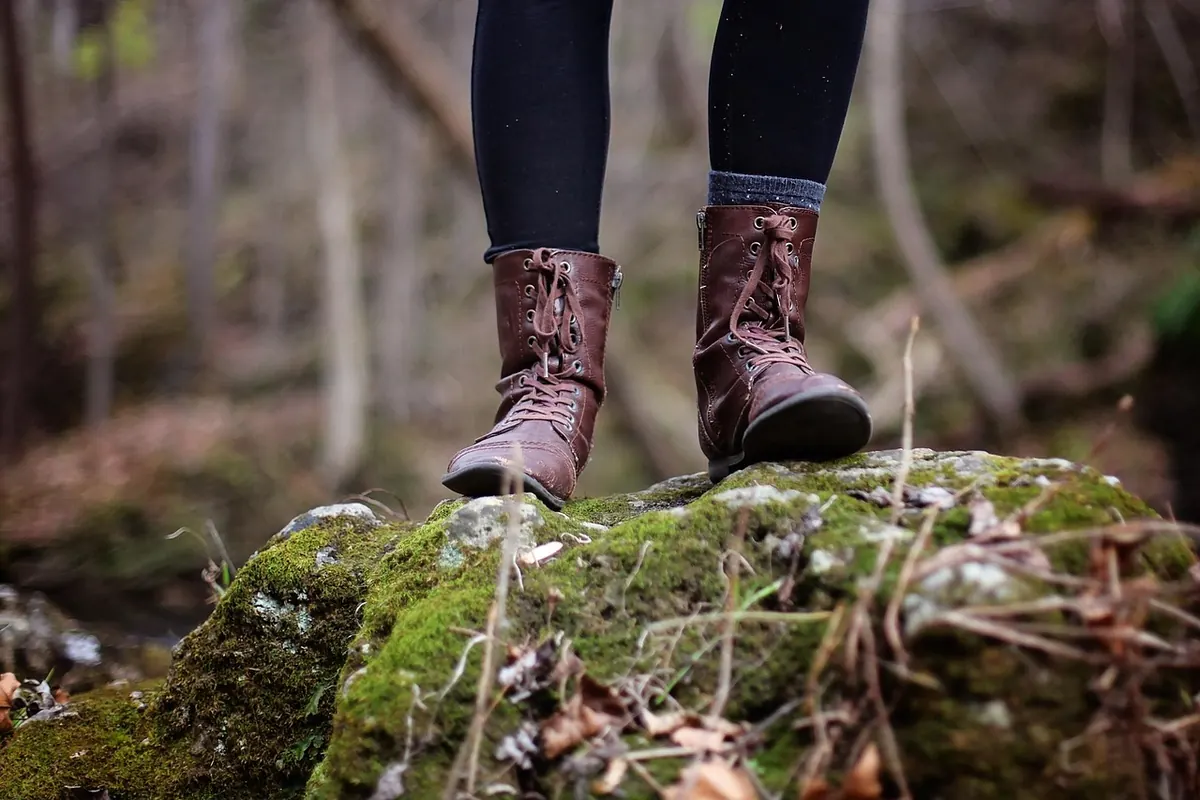
Gym trainers and fashion trainers are the quiet cause of many twisted ankles. Wet rock, wet grass, loose scree and peat bogs all punish soles with no grip. Walking boots offer more support on rough ground; trail shoes are lighter and fine for good paths in dry conditions. Whichever you choose, wear them in before a big day and pair them with proper walking socks rather than thin cotton ones that bunch and rub.
Learn to read the ground as you go. Step onto rock rather than wet grass where you can, use poles on long descents if your knees complain, and cross boggy ground where it is already trampled rather than pioneering a new route through it.
Small habits that annoy everyone else
Leave gates as you find them — open if open, shut if shut, and latched if latched. Do not climb walls where there is a stile or gate. Give cattle with calves plenty of room, and keep dogs close and under control around sheep and ground-nesting birds, especially in spring and early summer. Take all litter home, including banana skins and apple cores, which take a long time to break down and are not food for wildlife.
On single-track roads, use passing places properly and let locals past. Park so that farm vehicles, emergency vehicles and other walkers can still get through. It is not about rules for their own sake; the access that makes these hills so enjoyable depends on walkers being welcome.
A five-minute check before you set off
Stand by the car and run through this before you lock it:
- Does someone at home know the route, the finish point and the time to raise the alarm?
- Is the forecast still acceptable, including the wind?
- Have you got waterproofs, spare layer, torch, food and water?
- Can you identify where you are on the map right now?
- What is your turnaround time, and where is your escape route if it turns foul?
Do that every time, and the hills become steadily more enjoyable — because you are spending your energy on the walking rather than on managing a problem you could have avoided. If you have a heart, joint or breathing condition, or you are returning after illness or injury, it is worth a word with your GP about what is sensible for you.
Then get out there. The learning curve is short, and the reward is disproportionate.
Photo: Ylanite / Pixabay