Most of us carry a camera on every walk. It sits in a jacket pocket, smeared with sun cream and pocket fluff, and gets used for about ninety seconds at the summit before the flask comes out. Used with a little thought, that same phone can bring home the wide sweep of a ridge, the shine on a wet slate path, the mist sitting in the valley below you. Used carelessly, it produces a distant grey smudge and a sky gone white. The difference is not the phone. It is a handful of habits, and none of them are complicated.
Know what you are working with
Your phone's main camera is a wide lens. That makes it excellent for landscapes and awkward for anything far away. Resist the pinch-zoom: on most phones it crops the image and softens it, so a hill three miles off becomes a blurry lump. If you want the detail closer, walk towards it, or shoot wide and crop later on the screen — you will usually have plenty of pixels to spare.
If your phone has two or three lenses on the back, the main one is normally the best. Ultra-wide is handy for cramped bothies and dramatic foregrounds but bends straight lines at the edges; the telephoto tends to struggle in dull light. Learn which is which before you are standing on a summit in a gale.
Two housekeeping jobs matter more than any setting. Wipe the lens with a soft cloth — the inside of a cotton shirt will do at a push — because a greasy lens is the real reason your photos look flat and hazy. And turn the grid lines on in your camera settings so you have a reference for keeping the horizon level.
Composition: give the eye somewhere to go
A photograph of a view is rarely interesting on its own. What makes it work is a path through the frame for the eye to follow. A fence line running up a hillside, a stream, a worn track, the edge of a crag: all of these pull the viewer in from the foreground and out towards the distance.
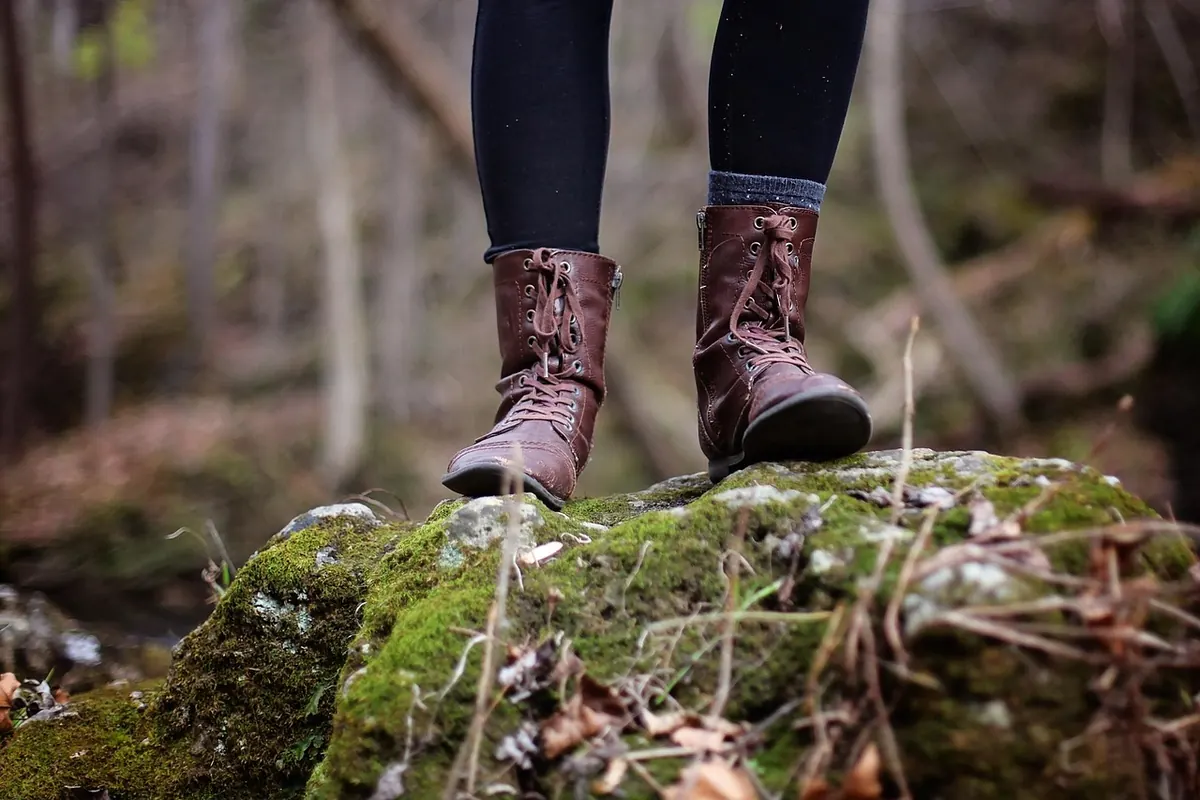
Get something close to the camera. Even a clump of heather, a wet rock or a boot on the path adds depth and tells the eye how far away the rest of the scene is. It also anchors the picture, so the shot does not float.
Include a person now and then. A walking figure on a ridge gives scale in a way that nothing else does, and it makes the photo a memory rather than a postcard.
- Keep the horizon level. If it is not level, fix it while you are standing there, not weeks later.
- Turn vertical for vertical subjects. Waterfalls, crags, tree trunks and steep gullies look better in portrait.
- Look behind you. The best light of the day is often on the view you have just walked past.
- Get low. Kneeling down makes foregrounds bigger and skies wider, and it costs you nothing but a wet knee.
Work with the light you have been given
Light decides more of the final image than any camera setting. The hour after sunrise and the hour before sunset give you long shadows, warm colour and soft contrast. In the middle of the day you get flat light and harsh ground, unless you head into woodland, where dappled shade and a canopy overhead work in your favour.
Overcast days are not a write-off. Cloud spreads the light evenly, which suits close-up detail — moss, lichen, water running over stones — and keeps colours from blowing out. Add mist and you have atmosphere that no bright afternoon can match.
When the sun is in front of you, the photograph becomes a silhouette. Sometimes that is exactly what you want: a figure on a skyline, a ridgeline against a bright sky. If it is not, turn around and put the sun behind you, then tap the screen on the brightest part you care about and drag the little sun slider down a touch. Slightly darker than the phone suggests almost always looks richer.
Keep the sun off the lens itself. Cupping your hand above the phone kills most of the flare that turns an otherwise good shot into a wash of haze.
Make the battery last the day
Nothing ends a photography habit faster than a dead phone four miles from the car. Screen brightness is the biggest drain, so turn it down and switch off auto-brightness if you can find it. Then work through the rest of this list before you set off.
- Charge fully the night before, and take a small power bank on longer days.
- Put the phone in airplane mode. You do not need signal on a hill, and searching for it is what eats the battery.
- Switch on low power mode, and close apps you are not using.
- Download offline maps in advance so you are not running a mapping app with the screen lit for hours.
- Turn off live photos and avoid video unless you really want it.
- Keep the phone warm. Cold drains batteries fast, so on winter days carry it in an inside pocket rather than an outer one.
Shoot in short bursts, then put the phone away. Leaving the camera app open with the screen on is what flattens the battery, not the photographs themselves.
Bring it home in one piece
A phone in a hip-belt pocket gets rained on, sat on and dropped. A simple dry bag or a zipped waterproof pouch costs little and prevents the sort of ending that ruins a day out. Keep it in a pocket that closes properly, and use a thin lanyard or wrist strap when you are photographing near an edge or above water — hands get cold and gloves make grip unreliable.
Cold weather brings condensation. Going from a frosty hillside into a warm café or car can fog the lens from the inside, so let the phone warm up gradually in a bag or an inside pocket before you use it. Silica gel sachets in your rucksack help a little. At the coast, remember that salt water is far less forgiving than rain: wipe the phone down afterwards with a barely damp cloth, and never let spray sit on the lens.
A short workflow for the trail
You will take better photographs if you stop properly rather than shooting while walking. When something catches your eye, take twenty seconds and do this.
- Decide what the photograph is actually about — the view, the weather, the person, the path.
- Choose your position and your height. Move two or three steps if it helps.
- Take three frames: a wide shot of the whole scene, a tighter one on the main subject, and a close detail.
- Check one image on the screen for exposure and horizon, then put the phone away and carry on.
Three deliberate photographs are worth more than thirty taken on the move, and they take less time out of your day.
Practise on your next local walk
Pick a short, familiar route — the one you could walk with your eyes shut — and give yourself a small brief. Photograph one path from three different heights, or spend the walk looking only for reflections, or wait for the last hour of light and shoot nothing but shadows. Familiar ground makes it easier to notice light and composition because you are not also navigating.
Back home, look through what you took and delete without guilt. Keep the two or three that made you feel something on the hill, and note what you would change next time. That is the whole method: walk, notice, take a few photographs carefully, and keep the ones that hold the day.
Photo: SplitShire / Pixabay